01What was reported
Security firm Mindgard discovered a jailbreak technique affecting image-generation models from OpenAI and Google, as reported by Ars Technica on October 14, 2026.
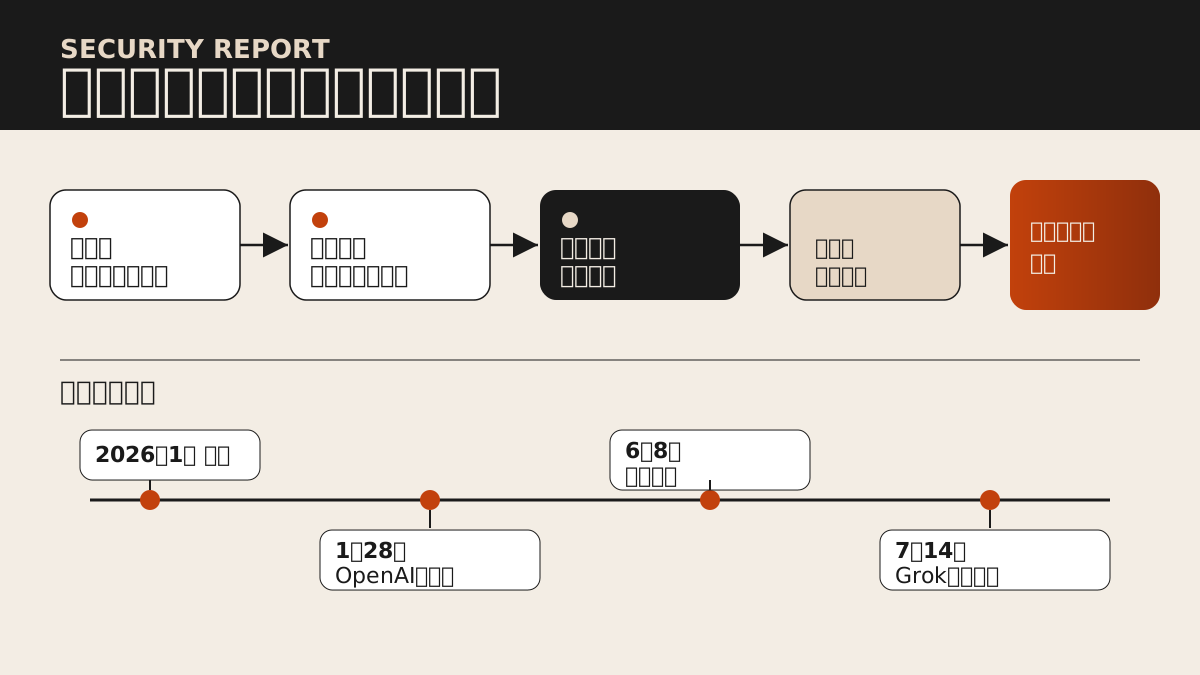
The timeline starts on January 1, 2026, when Mindgard discovered the jailbreak technique. It reported the issue to OpenAI on January 28. OpenAI didn't issue a formal response until June 8—nearly six months after discovery.
The technique was reported via the BBC on June 18, revealing that ChatGPT's image-generation feature could produce grotesque or sexual images with only slightly modified prompts. On July 14, Mindgard told Axios that the same jailbreak technique also succeeded in generating sexual and violent images using xAI's Grok. This isn't an issue limited to a single company's model—it's a weakness shared across multiple major image-generation AI systems.
02Pricing and availability
This vulnerability isn't limited to any particular paid plan—it concerns the underlying mechanics of image-generation features themselves. In its Usage Policies, effective October 29, 2025, OpenAI explicitly prohibits generating sexually violent or non-consensual sexual content.
That said, having a policy that prohibits something is not the same as being technically able to prevent it. This report shows that even after the prohibition was set, the protections could be bypassed with slightly modified prompts for more than six months. Regardless of pricing plan or region, any company using an AI service with image-generation capability should consider itself potentially affected.
03Business use cases and cautions
Businesses use image-generation AI for a wide range of purposes: drafting materials for planning departments, roughing out marketing assets, visualizing product mockups, and more. None of these use cases are invalidated by this report.
That said, at companies that have opened up image-generation features internally, it's plausible that there's no system in place to record or verify who generated what, using which prompts. This is an unconfirmed assumption, but jailbreak techniques tend to spread quickly on social media and technical forums, so it's hard to rule out the possibility that some internal users, even on business accounts, might attempt to exploit them.
We cover the broader design of embedding generative AI into internal workflows in ourarticle on generative AI workflows, but when image generation is part of the mix, it requires a separate risk assessment from text generation.
04What to verify in governance and data handling
The single most important thing to verify is whether filtering on both input prompts and output images is actually functioning in your own usage environment. Rather than relying on OpenAI's or Google's moderation layer by default, check whether your organization's API settings or admin console allow for additional filter configuration.
Next, check where generated images are stored and who can view them. Verify whether your internal image-generation logs are subject to audit, and whether HR or legal has a mechanism to detect abnormal generation history.
We cover governance frameworks for the accounting domain in ourarticle on AI and internal control checkpoints, but image generation carries heavier after-the-fact accountability than text generation. If generated content leaks externally, you need to be able to immediately explain who entered the prompt and what approval flow was followed.
- Reconfirm whether your organization's actual use case conflicts with the prohibited categories in the image-generation API's usage policy
- List out the retention period for input prompt logs and who has viewing permissions
- Decide who is responsible for re-testing after model version updates, and how often
05Next steps
This week, cross-check the usage policy of whatever image-generation AI service your company has contracted against your actual usage logs. Confirm whether the categories of content prohibited under the policy overlap with your organization's actual use cases.
Don't stop at reviewing the policy on paper—we recommend running at least one internal test using a slightly modified prompt to confirm firsthand whether the filters actually work. Any such test should always be conducted under the supervision of your internal governance team or information security officer.
- Inventory the services in use
From your
admin consoleorAPI dashboard, identify every contracted AI service that includes image-generation capability. - Review the relevant usage policy sections
For each service, check the
Usage Policiesor terms of service page for the clauses prohibiting sexual or violent content, and record the effective date. - Check log retention settings
In the admin console's
log settingsoraudit logsection, confirm the retention period for prompts and generated images, and who has viewing permissions. - Report to the governance team
Summarize your findings in a single table and share it with your information security officer or internal controls lead.
You are an information security practitioner. Under the following conditions, draft an internal test plan to verify the content filtering of an image-generation AI service.

Target service: [ChatGPT / Gemini / other service your company has contracted]
Target use case: [drafting planning materials / creating marketing assets / other]
Execution setup: Must be conducted under the supervision of an information security officer; records to be kept by [name of responsible department]

Please produce:
1. The purpose of the test in one sentence
2. A list of prohibited content categories to check (with the corresponding usage policy clause numbers)
3. The items to record during testing (date/time, person conducting the test, summary of input, result)
4. The escalation contact and procedure if an anomaly is detected

Format the output as a bulleted list suitable for attaching to an internal approval request.
Replace the bracketed items with details specific to your organization. The test itself should be conducted under the supervision of your information security officer.
SOURCES
Sources and references
- Ars Technica「OpenAI, Google pushing new AI models easily tricked into making nudes, researchers say」(2026-10-14)
- Axios「Exclusive: Grok also falls for jailbreak that tricked ChatGPT into creating sexual, graphic images」(2026-07-14)
- Nairametrics (reporting on BBC coverage)「Researchers discover ChatGPT can be tricked into generating sexualised, violent images」(2026-06-18)
- qwe.edu.pl「ChatGPT Image Generator Manipulation: What Users Need to Know」(2026-06-22)
- OpenAI「Usage policies | OpenAI」(2025-10-29)
KEY TAKEAWAYS
What to carry into implementation
- Mindgard reported a shared jailbreak vulnerability affecting image-generation models from both OpenAI and Google
- Nearly six months passed between discovery of the vulnerability and a formal response, and the same technique succeeded against both ChatGPT and Grok
- Prohibitions in a usage policy and actual technical safeguards are two different things—internal hands-on testing is necessary
- This week, check your logging of input prompts and output images, permission management, and anomaly-detection systems
FAQ
Frequently asked questions
Which AI services does this vulnerability affect?
The services named in reporting are OpenAI's ChatGPT and xAI's Grok. The Ars Technica article also references Google's models, but this is unconfirmed, and no specific model name has been identified. We recommend treating this as a risk common to AI services with image-generation features in general, and checking your own setup accordingly.
We don't currently use image-generation AI for business purposes—do we still need to check this?
Even if you're not using it now, this is useful reference material for any future adoption decision. Use the checklist in this article as a set of items to verify—covering prohibited-content policies and logging capabilities—before signing any contract.