

01Why Businesses Need to Redo Process Inventories Now
The reason to redo a business process inventory is that the axis of judgment has changed. Traditional inventories were used to identify waste and standardize processes. But an inventory built on the premise of generative AI requires a three-tier judgment for each task: can AI handle it alone, does it need human approval, or should it not be handed to AI at all. Without this judgment axis, an inventory list provides no basis for prioritizing AI adoption.
According to MIC's FY2025 Communications Usage Trend Survey, 27.3% of companies have introduced IoT, AI, or similar systems for collecting and analyzing digital data. This is up 8.9 percentage points from the previous year (MIC, May 29, 2026). While adoption is progressing, the inventory work needed to decide which tasks to start with appears to be lagging behind. 68.9% of companies now have a policy of "actively using" or "using in limited areas" generative AI, a significant jump from 49.7% the previous year (MIC, July 24, 2026). Even when a policy is in place, many companies appear to lack criteria for selecting which tasks to target.
This trend overlaps with the movement to embed generative AI directly into internal business workflows. As discussed in Building Next-Generation Internal Workflows Powered by Generative AI, designs that embed AI into workflows tend to break down unless you first understand how structured each individual task is. A business process inventory should be positioned as the work that establishes the preconditions for workflow design.
Finishing the inventory before building workflows matters because doing it in reverse order means doing the work twice. Even if you draft a workflow design first, you can't determine on paper where AI can be inserted unless field tasks have already been broken down to the individual work-unit level. You'll end up suspending the design and going back to the inventory, forcing stakeholders to re-align as well. If the inventory is established as an information base first, workflow design can simply build on top of it.
02Accounting, HR, Sales, and Planning Require Different Inventory Granularity
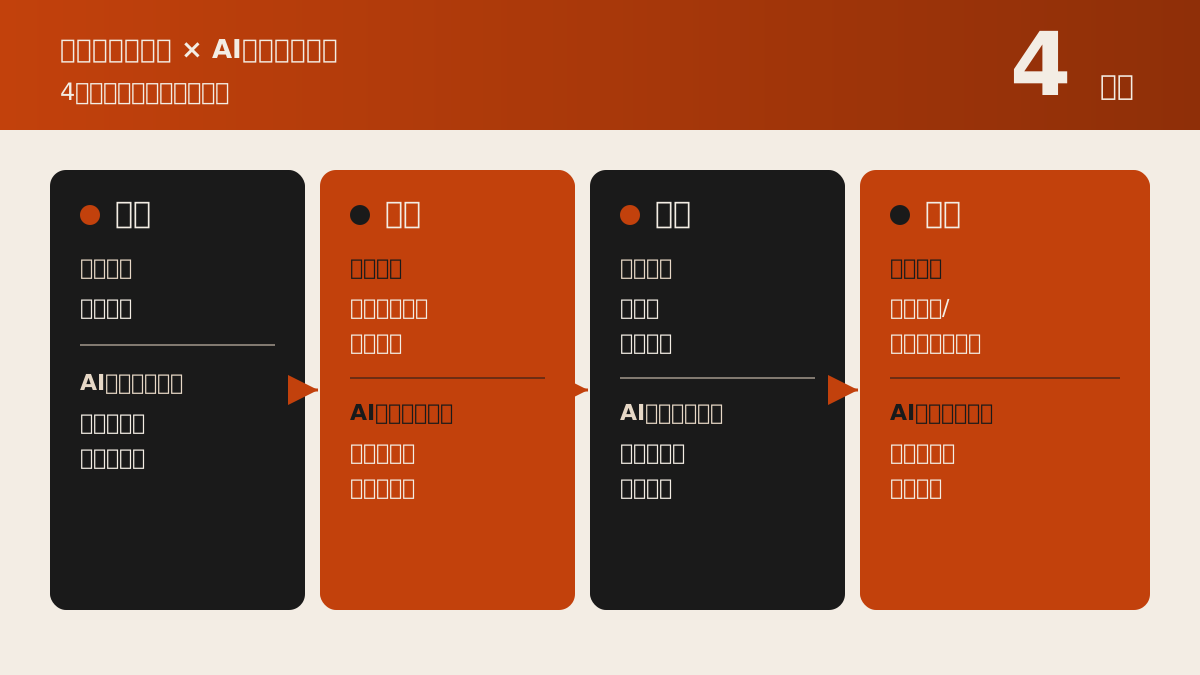
The level of detail that needs to be recorded in an inventory differs by job function. Accounting needs to be broken down to the journal entry level. For example, a broad category like "monthly closing" would leave tasks that can and cannot be handed to AI mixed together. Breaking it down further into items like "clearing advance payments," "calculating depreciation for fixed assets," and "automatic classification of accounts" makes it possible to judge where AI can be applied.
HR needs to record processes that involve handling personal information as separate items. Document screening in hiring, note-taking during performance review interviews, and issuing resignation paperwork are all HR tasks, but they require different levels of governance when handed to AI. Decisions that directly affect a worker's status, such as hiring or treatment decisions, must not simply apply AI output as-is; the rationale must be reviewed by a human, with a clearly designated person responsible for the final decision. If these processes are separated out at the inventory stage, it becomes much easier to later discuss how much can be entrusted to AI and where human approval should begin.
Sales should separate out points where customer-specific individual judgment occurs. Drafting quotes, creating proposal drafts, and summarizing meeting minutes are relatively easy to hand to AI, while final decisions on price negotiations and contract terms should remain with humans. Planning should be divided at the boundary between information gathering and decision-making. Collecting market data and organizing competitor information can be handed to AI, but prioritizing strategy requires human judgment. Different job functions require different breakdown units and judgment criteria for the inventory. Applying a single uniform template across all departments will lead to misjudgments specifically in the departments with coarser granularity.
A similar challenge appears on manufacturing shop floors. As discussed in Shifting to an AI-Accompanied Operating Model in Manufacturing, how granularity is aligned at the equipment and process level directly affects quality and safety on the shop floor, demanding even greater precision in breakdown than office work. How granularity is designed by job function is a point that determines the success or failure of an inventory regardless of industry.
Work to align granularity tends to stall when run as a cross-departmental project. If a staff member who doesn't understand the actual work of each department decides on a company-wide common template first, the fine-grained journal entries of accounting and the coarse-grained deal-level items of planning end up lined up in the same column, making comparison and prioritization impossible. It makes more sense to have each department first provide the job-function-specific perspectives discussed above, and then integrate them into a common format afterward—an inventory grounded in actual field conditions.
03Skipping the Inventory Leaves Key-Person Dependency Risk Invisible
Companies that don't conduct a business process inventory tend not to notice when work is concentrated on a specific individual. According to a survey by SIGQ Inc., 72.0% of organizations reported that incident response depends on just one or two people. Of those, 88.9% are aware of the risk that person might leave within the next one to two years (SIGQ Inc., April 2, 2026). Even if the risk is recognized, without an inventory that puts into words what that person actually does, neither handover nor AI adoption can proceed.
Simply creating a handover document isn't enough. As discussed in Why Handover Documents Created to Reduce Key-Person Dependency Stop Being Used, documents fall out of use because they fail to record the judgment criteria behind the work. If, at the inventory stage, you also record who makes decisions on a given task and by what criteria, that information can serve both as material for AI judgment and as a way to reduce risk.
Addressing key-person dependency in accounting, in particular, needs to be considered together with strengthening internal controls. As shown in Eliminating Key-Person Dependency in Accounting: A Roadmap for Strengthening Controls and Adopting AI Agents, recording judgment criteria during the inventory process lays the groundwork for both resolving key-person dependency and adopting AI agents.
A common reason organizations recognize the turnover risk but fail to act on it is that no one has articulated what actually needs to be handed over. It's not unusual for the person doing the work themselves to be unable to clearly explain which parts of their job involve judgment and which are routine. Simply adding a column for judgment criteria to the inventory ledger and asking for it to be filled in can prompt the person doing the work to put their own tasks into words. Reframing key-person dependency not as a documentation problem but as an inventory design problem is the shortest path to preventing it from becoming a hollow exercise.
04Three Criteria for Judging Whether a Task Can Be Handed to AI
Whether a task can be entrusted to AI should be judged using three criteria: how structured the input is, how reproducible the judgment is, and the scope of impact if an error occurs. For each cataloged task, check whether the input is in a fixed format or free text, whether the same conditions always produce the same conclusion, and whether a mistake would directly affect money or contracts.
Applying these three criteria, journal entry input in accounting can be classified as a task well suited for AI, since the input is structured and the judgment is highly reproducible. On the other hand, a task like an HR performance review interview involves free-text input and low reproducibility of judgment, so AI should be limited to drafting support, with the final decision left to a human. The points that need to be organized around internal controls before using AI in accounting are summarized in Internal Control Considerations to Address Before Using AI in Accounting.
Of the three criteria, "scope of impact if an error occurs" is the one most prone to misjudgment. Even for a task where the input is structured and the judgment is highly reproducible, if an error would directly affect contract terms or an externally presented price, the design should still include a human final check rather than confirming the AI's output as-is. Conversely, even if the input is somewhat free-text, if the impact of an error is limited to an internal draft, it becomes easier to expand the scope of what's entrusted to AI. In practice, the three criteria shouldn't simply be added together—weighting the impact-scope criterion more heavily than the other two is the more practical approach.
05Failing to Define Access Permissions for Inventory Data Creates a Leak Risk
The ledger created through a business process inventory is confidential information in its own right. It lists business partner names, unit prices, approval flows, and the judgment criteria used in customer interactions, so placing it in a shared folder without designing access permissions creates a risk of data leaving the company. Before starting the inventory, you need to decide who can edit the ledger and who can only view it.
The same applies when having an AI agent read inventory data. Unless the scope an AI agent can access is segmented by department or by task, inventory data from one department could become visible to staff in another department. Agents that run continuously are especially prone to having their access permissions set once and then left unreviewed, so permissions need to be revisited regularly in step with inventory updates. Designing the AI suitability category and access permissions columns of the inventory ledger together makes it easier to decide how much authority to grant for each task, and to revisit that decision later.
06Five Steps to Start a Business Process Inventory
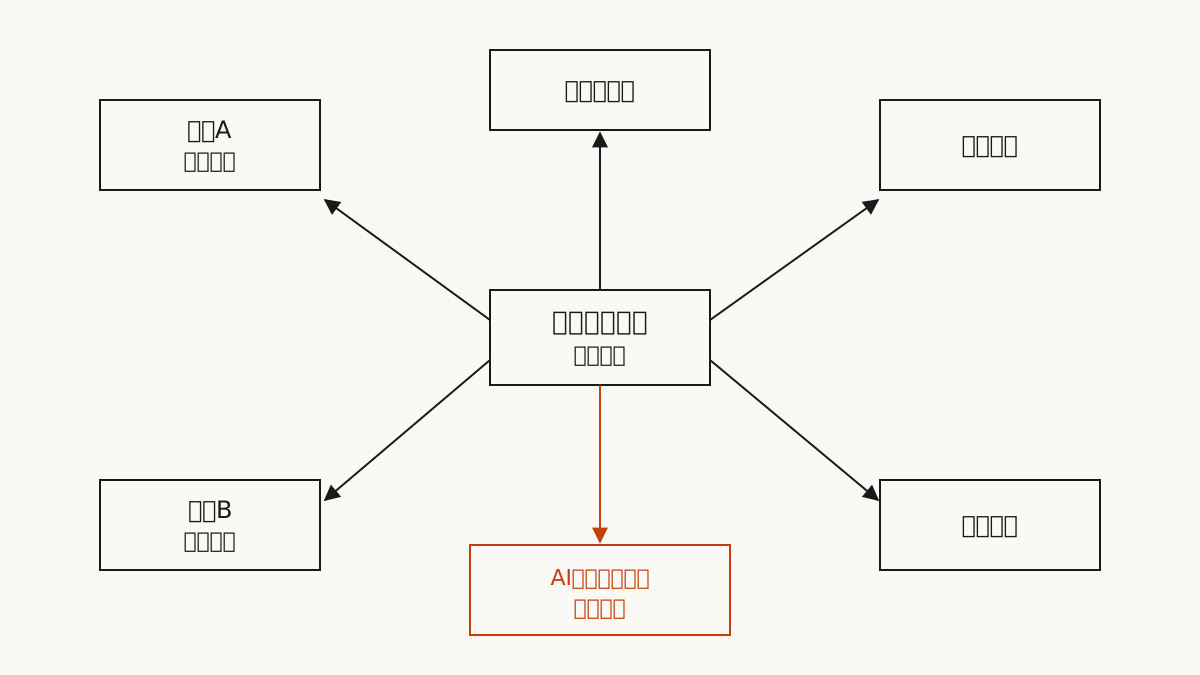
A business process inventory should start with deciding the format of the ledger first, before writing anything down. If you start writing without deciding on a format, granularity will vary by job function and can't be reconciled later. Proceed with the following steps.
- Decide the ledger format
Prepare columns for
task name,person in charge,frequency,input format,reproducibility of judgment,scope of impact if error occurs,AI suitability category, andaccess permissions. - Assign an entry owner per department
Ask the person who best understands each department's work—accounting, HR, sales, planning—to do the entries. An inventory is more accurate when written by the person actually doing the work.
- Break tasks down to the work-unit level
Rather than a broad category like "monthly closing," break tasks down to a unit that can be executed as a single piece of work, such as "clearing advance payments."
- Assign an AI suitability category using the three criteria
Using input structure, reproducibility of judgment, and scope of impact if an error occurs, classify each task into one of three categories:
can be entrusted to AI,AI drafts + human approval, orhuman-handled. - Set access permissions and an update cycle
Set access permissions for the ledger by department, and establish an operating cycle to review the inventory contents every three months.
You are an assistant that supports business process inventory work. Evaluate the following task using three criteria: "how structured the input is," "how reproducible the judgment is," and "the scope of impact if an error occurs." Classify it as one of: `can be entrusted to AI`, `AI drafts + human approval`, or `human-handled`. Include a 1-2 sentence reason for your classification.

Task name: [Enter task name]
Task description: [List the specific work steps]
Current owner: [Name or job title]
Frequency: [daily/weekly/monthly/quarterly, etc.]
Past error examples: [Enter if any, otherwise "None in particular"]

Output format:
- AI suitability category:
- Reason for classification:
- Judgment points that should remain with a human (if any):
Run this for one task at a time, by department. Lining up the results across accounting, HR, sales, and planning also helps surface differences in granularity between departments.
07What to Measure Next at Your Company
The first thing to check is whether your company's inventory ledger has an AI suitability category column. Many companies likely have a task list but lack a column for judging whether AI can handle it. According to a survey by IPA, among Japanese companies working on cross-organizational digitalization of business processes, only 36.4% had achieved measurable results (IPA, June 26, 2025). Even when initiatives are underway, if there's no predefined judgment criteria for which tasks to hand to AI and where human approval should be inserted, the digitalization effort itself is unlikely to translate into results. Closing the gap between effort and results likely comes down to building judgment criteria in at the inventory stage.
Among companies with 100 or fewer employees, 48.0% have not undertaken any DX initiatives at all (IPA, June 26, 2025). Regardless of company size, companies that haven't conducted an inventory are the ones stuck without a way to prioritize AI adoption. The next step is to open your company's task list and check whether the AI suitability category column is filled in. If it isn't, start with a single department using the steps and prompt in this article.
Building up this kind of inventory ultimately lays the groundwork for operator-led AI transformation. Three Conditions for Successful Operator-Led AX discusses conditions that largely assume a task-level inventory has already been completed. Rather than deferring the work of building judgment criteria, starting from a small unit may look like the long way around, but it's actually the fastest path forward.
The data accumulated through the inventory isn't limited to material for AI judgment—it becomes an information asset that can also be used in management decision-making. As discussed in How the Deltalyze Platform Aims to Instantly Connect Data and Decision-Making, a mechanism that directly connects field data to decision-making assumes that individual tasks have already been structured and assigned a suitability category. An inventory isn't something you build once and finish—it only continues to function as the foundation for this kind of data utilization if it's kept continuously updated.
SOURCES
Sources and references
- MIC「FY2026 Information and Communications White Paper (Summary)」(2026-07-24)
- MIC「Results of the FY2025 Communications Usage Trend Survey」(2026-05-29)
- IPA (Information-technology Promotion Agency, Japan)「DX Trends 2025 Research and Analysis Discussion Paper 2025-01」(2025-06-26)
- SIGQ Inc.「2026 Survey on the Actual State of Key-Person Dependency in Incident Response」(2026-04-02)
- PR TIMES (Zept Inc.)「Zept Inc. launches "AI Utilization Inventory Report," breaking down tasks to the work-unit level」(2026-09-18)
- LAC Co., Ltd.「LAC launches "Implementation and Governance Support Service for Microsoft Agent 365" to support safe business use of AI agents」(2026-10-07)
KEY TAKEAWAYS
What to carry into implementation
- A business process inventory is not "work of writing things down"—it should be designed as an information base for judging which tasks can be entrusted to AI
- Accounting, HR, sales, and planning each require different breakdown units and judgment perspectives; a uniform template won't produce consistent granularity
- Assign an AI suitability category using three criteria: how structured the input is, how reproducible the judgment is, and the scope of impact if an error occurs
- The inventory ledger itself is confidential information; access permissions and the scope an AI agent can reference need to be designed in advance
FAQ
Frequently asked questions
Should a business process inventory or AI adoption come first?
The business process inventory should come first. If you introduce AI without first assigning AI suitability categories through the inventory, you won't be able to verify afterward which tasks actually benefited. We recommend advancing the inventory and the design of judgment criteria together.
How detailed should the inventory granularity be?
Break tasks down to a unit that can be executed independently as a single piece of work. For accounting, that's the journal entry level; for sales, it's units like drafting a quote or summarizing meeting minutes. Leaving tasks at a broad category level mixes together work that can and cannot be handed to AI.
Is it fine to build the inventory in Excel?
The format itself isn't an issue. However, you must include AI suitability category and access permissions columns, and operate with a defined update cycle. What matters more than the format is whether judgment criteria and access permission design are in place.