
01What Was Announced
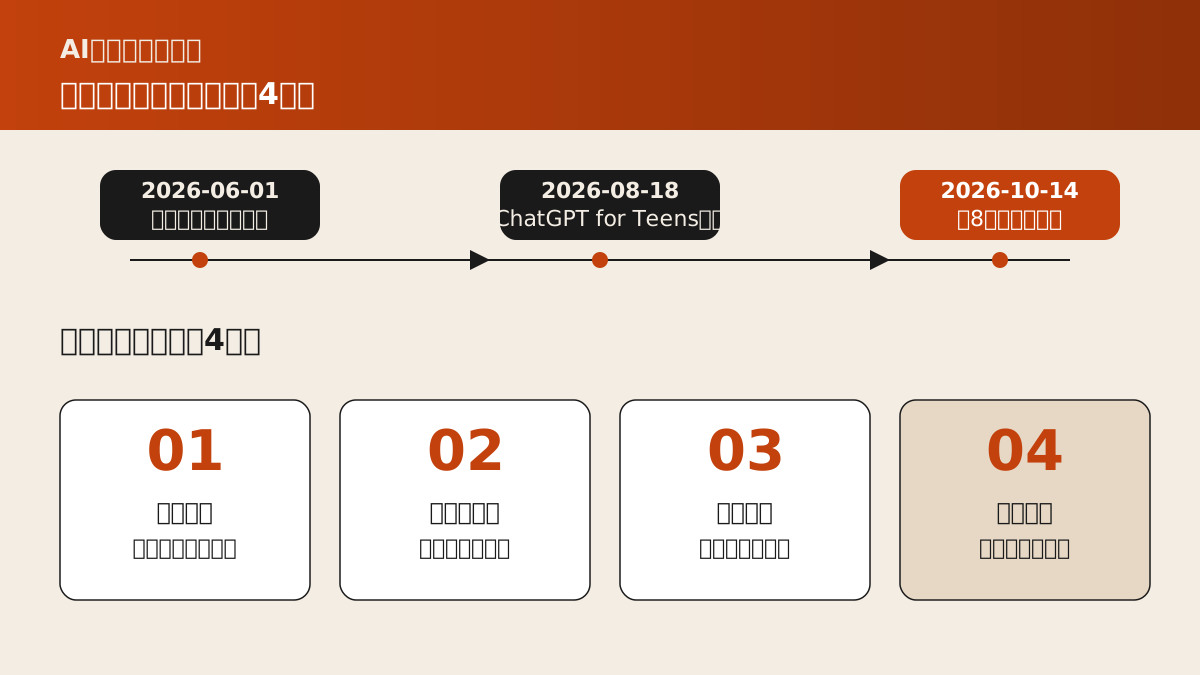
On October 14, 2026, attorneys general from eight US states filed a lawsuit against OpenAI concerning ChatGPT's safety. According to CNBC's reporting, the central claim is "it presented itself as safe, but reality did not match."
Prior to this, on June 1, 2026, Florida filed the nation's first state-led lawsuit against OpenAI, naming both the company and CEO Sam Altman personally as defendants. A feature of the developments over these four months is that state-level lawsuits came first, and this time multiple states have aligned to contest similar issues together.
OpenAI was not without a response. On August 18, 2026, it launched ChatGPT for Teens, strengthening automatic detection of users under 18 and parental control features. This was announced on OpenAI's official blog. However, the lawsuit continues even after this safety measure was announced. It is thought that the very act of announcing these measures made it easier to contest the gap between safety claims and actual practice as an issue.
02Pricing and Scope of Service
ChatGPT for Teens is an existing mechanism that launched on August 18, 2026, applying age-appropriate restrictions and parental control features to accounts identified as belonging to users under 18. This is stated on OpenAI's official blog.
What needs to be verified is not differences between pricing plans themselves, but how the terms of service for the plan your company has contracted align with the safety claims now at issue. In the news coverage as well, what is cited as the point of contention is the gap between claims and actual operational practice, not a change in contract terms. It is practically useful to directly check the body of the terms of service to see whether this same gap might apply to your own contract.
03Where This Matters for Your Operations
This lawsuit itself does not change how your operations are run. However, the precedent that a gap between a vendor's safety claims and actual practice can become a legal risk is an issue worth referencing regardless of whether generative AI is used in accounting, HR, sales, or planning departments.
If accounting uses ChatGPT to read source documents or draft financial materials, settings related to use for training and whether minors are using the service are not the relevant issues. What matters is whether the safety and accuracy explanations published by the vendor match the assumptions written in your own internal guidelines. The same structure can be used to check HR inquiry handling, sales proposal preparation, and planning department research work.
Although unconfirmed, this lawsuit may prompt a review of how safety claims are stated in enterprise contracts. We believe it is worth establishing an internal process to check for differences in terms of service at the time of contract renewal.
This kind of review can also be an opportunity to take stock of workflows already in place.Building Next-Generation Internal Workflows with Generative AIdiscusses identifying cross-departmental AI processes, which makes it easier to immediately pinpoint the scope of impact when a terms-of-service risk like this one is discovered. For companies expanding AI use through frontline-led initiatives, this is also a scene where the balance discussed inThree Conditions for Successful Frontline-Led AXbetween "frontline discretion" and "company-wide governance" is being tested.
04What to Verify Regarding Governance and Data Handling
There are four points to verify. The first is settings for use in training, i.e., whether the default for your enterprise plan matches your company's configuration. The second is where and how long data is stored, i.e., whether this is clearly stated in the contract or privacy policy. The third is usage authorization, i.e., whether it is defined which departments and roles may use AI for which tasks. The fourth is audit records, i.e., whether it is possible to later trace who entered what and when.
These four points are basic items that should be checked the moment generative AI is introduced into operations, regardless of their direct relevance to this lawsuit. Prompted by this lawsuit coverage, we recommend cross-checking whether the wording in internal regulations matches actual operational practice.
For how to build governance in the accounting domain,Points to Organize Around Governance Before Using AI in AccountingandResolving Key-Person Dependency in Accounting: A Roadmap for Strengthening Governance and Introducing AI Agentsorganize concrete issues. For governance in HR, AI-Only Termination Decisions and HR Governance: Issues Japanese Companies Should Address Early in HR AIcovers state-level regulatory trends on AI-driven termination decisions, addressing the division of judgment between people and AI in HR.
- Whether settings for use in training match your company's contracted plan
- Whether data storage location and retention period are clearly stated in the contract
- Whether usage authorization is defined by department and role
- Whether audit records of input content and output results are retained
05The Next Step
What you should do this week is cross-check the terms of service for the generative AI services your company has contracted against your internal guidelines. Print out the safety and data handling explanations stated on the vendor's official site and read them side by side with the corresponding provisions in your internal guidelines.
If you find places where the wording does not match during this review, we recommend sharing those points with your administrative and IT departments and establishing a plan to correct them by the next contract renewal. The overall design of the process for internally adopting generative AI is covered inBuilding Next-Generation Internal Workflows with Generative AI. Regulatory trends concerning overseas AI vendors are expected to continue, and as discussed inAI Safety and Management Decisions: Issues That Adopting Companies Should Watch, the relationship between safety and management decision-making is drawing attention. We recommend not treating the review of contract terms as a one-time task, but making it a regular practice aligned with these ongoing developments.
- 1. Check Your Contracted Plan
Open the admin screen for the generative AI service your company has contracted, and check the items for training-use permission and data retention period under
SettingsorAdmin Console. - 2. Obtain Official Documentation
Download the PDF or page for the terms of service and privacy policy from the vendor's official site.
- 3. Cross-Check Against Internal Guidelines
Compare the four items written in your internal guidelines — "use for training," "data storage," "usage authorization," and "audit records" — line by line against the corresponding sections of the official documents.
- 4. Record Discrepancies
List any places where the wording does not match, or where your internal guidelines are silent, and share the list with your administrative department.
- 5. Set a Plan for Updates
Decide who is responsible and by what deadline to fix the discrepancies, by the next contract renewal date or the next revision of internal regulations.
SOURCES
Sources and references
- CNBC「OpenAI sued by 8 states over ChatGPT safety concerns」(2026-10-14)
- The Hill「8 states sue OpenAI, alleging it misled users on ChatGPT safety」(2026-10-14)
- UPI (via Yahoo)「Eight states sue OpenAI over alleged dangers posed by ChatGPT」(2026-10-15)
- Florida Attorney General (myfloridalegal.com)「Attorney General James Uthmeier Files First-in-the-Nation State-Led Lawsuit」(2026-06-01)
- OpenAI Official Blog「Introducing ChatGPT for Teens」(2026-08-18)
- OpenAI Official (PDF)「Protecting Teen ChatGPT Users: OpenAI's Teen Safety Blueprint」(2025-11-01)
KEY TAKEAWAYS
What to carry into implementation
- The lawsuit by eight US states centers on the gap between ChatGPT's safety claims and actual practice
- What matters for enterprise adoption is not whether age verification exists, but whether terms of service match internal operations
- Use for training, data storage, authorization, and audit records are four basic items to check regardless of this lawsuit
- This week, cross-check the wording of contract terms and internal guidelines line by line
FAQ
Frequently asked questions
Does this lawsuit affect generative AI use by Japanese companies?
It carries no direct legal force, but as a precedent in which a gap between a vendor's safety claims and actual practice became a point of contention, it can serve as material for reviewing what to check at the time of contracting.
Is ChatGPT for Teens relevant to enterprise plans?
ChatGPT for Teens is a feature for individual users under 18 and is separate from enterprise plan contract terms. However, it is worth referencing as material for understanding the overall picture of safety measures the vendor has published.